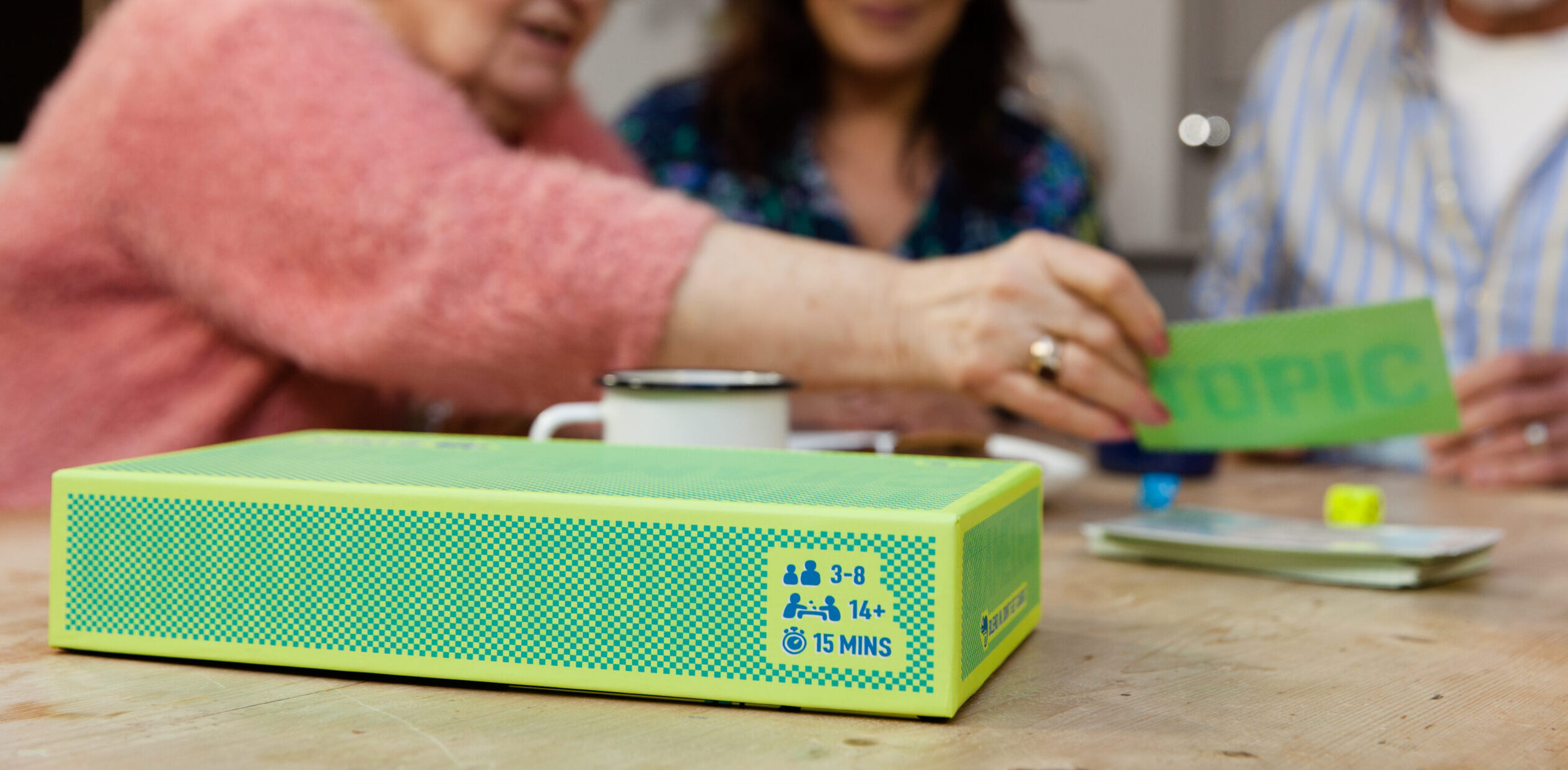
The best board game for family game night is Herd Mentality. It takes one minute to teach, handles four people or twenty, and a nine-year-old can beat an adult at it fairly. If your family skews younger, start with OK Play. If somebody at the table wants a real strategy game, Ticket to Ride is the one everyone else will still enjoy losing to.
Most board games for kids and adults are really board games for one or the other. The box says ages 8 and up, then the rules take twenty minutes to explain, and by the time you start the youngest has wandered off and one adult is checking their phone.
What actually works is a game where everyone is guessing at the same thing. Nobody has an advantage from being older, or from having played before. That’s the filter we used, and the board games for kids and adults below all pass it. Every pick teaches in under five minutes, keeps everyone in the round at once, and gives the youngest person a genuine shot at winning.
Quick picks
- Best Overall: Herd Mentality
- Best for Younger Kids: OK Play
- Best for Big Families: Chicken vs Hotdog
- Best Strategy Pick: Ticket to Ride
- Easiest to Learn: Sushi Go
- Best Team Game: Just One
- Also great: The Chameleon
- Also great: Cards vs Gravity
- Also great: Anomia
Herd Mentality
Best Overall
Don’t be clever. Be obvious. The whole family can do obvious.
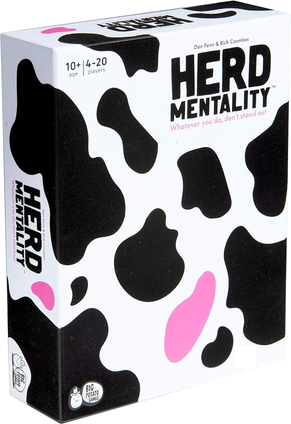
Players: 4–20 | Ages: 10+ | Play time: about 20 minutes
Somebody reads a question. Name a yellow food. Everyone writes an answer on their own pad, then you all reveal at once. Match the majority and you take a cow token. Get eight cows and you’ve won.
The twist is that being right doesn’t help you. Being popular does. That single flip is why it works so well for a family, because a ten-year-old is often better at guessing what a room will say than the adult overthinking it. Answer alone and you get landed with the Pink Cow, a foam penalty piece that blocks you from winning until you pass it on.
It scales further than anything else here. Four players works fine and twenty works genuinely well, so it survives the family game night where three extra cousins turn up. Of all the board games for kids and adults we’ve put in front of a mixed-age room, this is the one that needed the least explaining.
Pros
- Handles 4 to 20 players, so nobody gets turned away
- Kids compete with adults on completely level ground
- Explains itself in about one minute
Cons
- Needs at least four people, so it’s no good for a quiet Tuesday
- Handwriting becomes a problem with younger kids
- The Pink Cow can sting if your family takes losing personally
OK Play
Best for Younger Kids
Five in a row. Learn it in ten seconds, lose to a seven-year-old in eleven.
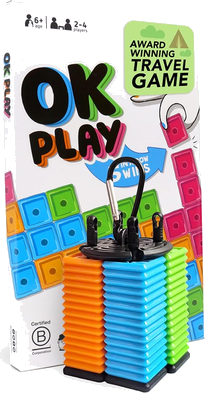
Players: 2–4 | Ages: 8+ | Play time: about 15 minutes
Pick a color, grab your stack of tiles and start laying them down. First to make a line of five wins. Horizontal, vertical or diagonal, it all counts.
This is the one for the part of the evening where a younger kid needs a game of their own. The rules fit in a sentence, so there’s no explaining, and it turns out to be surprisingly deep once everyone realizes you can build and block at the same time. Expect the kids to spot that before the adults do.
The tiles are waterproof and the whole thing clips to a bag with a carabiner, which matters more than it sounds. It’s the game that survives being played on a kitchen floor, in a tent, or in the back of a car on the way home.
Pros
- Genuinely learnable in about ten seconds
- Waterproof tiles survive spills, sand and small children
- Clips to a bag, so it travels without a box
Cons
- Caps at four players, so it’s not the main event
- Pure strategy, so there’s no silliness to fall back on
- Two-player games can get grindy between evenly matched players
Chicken vs Hotdog
Best for Big Families
Flip a rubber chicken. Stick the landing. Somehow this is a real game.
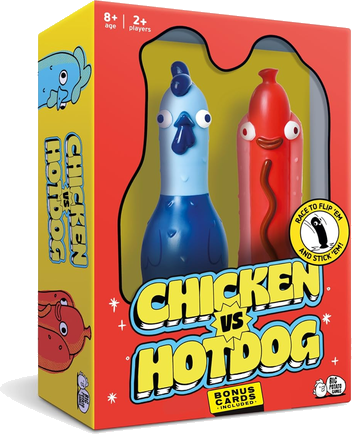
Players: 2–10 | Ages: 8+ | Play time: about 20 minutes
Two teams, one rubber chicken and one rubber hotdog. These are the Sling’Ems, and the entire game is flipping them through 30 increasingly stupid challenges. Turn over a card, bid for the right to attempt it, then flip and try to stick the landing.
Play the same card as your opponent and you trigger Flip-o-Rama, where both teams go at once and the first to land it takes the round. That’s the bit that makes a room loud. It’s also the bit that gets the grandparent who said they were just watching up out of the chair.
It gets people standing up, which is the reason it belongs in a family lineup. Every other game here happens around a table. This one happens around the room, and it’s the natural thing to put on when the kids have been sitting still too long.
Pros
- Physical, so it breaks up a night of sitting down
- Team play means little kids can be carried by a good partner
- Two players or ten, it works either way
Cons
- Loud, and there’s no quiet version of it
- You need floor space and nothing breakable nearby
- Physical skill does matter, unlike everything else on this list
Ticket to Ride
Best Strategy Pick
Collect train cards, claim routes, quietly ruin your sister’s plan.
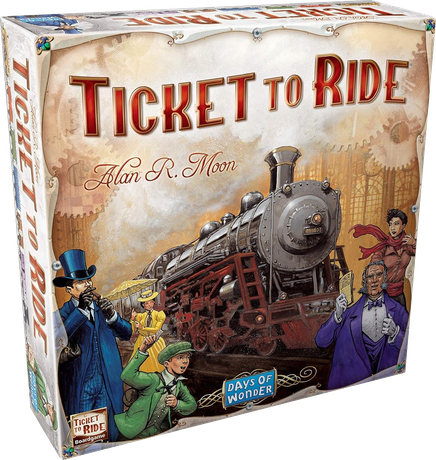
Players: 2–5 | Ages: 8+ | Play time: 30 to 60 minutes
You collect colored train cards, spend them to claim routes on a map, and score bonus points for secretly completing the destinations on your ticket cards. Games run 30 to 60 minutes, which makes this the longest thing here by a distance.
It earns the space because every family has one person who wants an actual game. Ticket to Ride is the one that satisfies them without losing anybody else, since the core action on your turn is either take cards or place trains. A child of eight can play it properly, not just be walked through it.
Be honest about the pace before you put it on the table. There’s real downtime while somebody thinks, and it doesn’t handle a room of ten. Treat it as the main course when your family night is four people who want to concentrate, not the opener.
Pros
- A proper strategy game that an eight-year-old can still play
- Turns are simple, so the rules never get in the way
- Reliably the pick that converts a non-gamer parent
Cons
- 30 to 60 minutes is a big ask on a school night
- Caps at five players
- There’s genuine downtime while other people plan
UK buyers: the widely stocked edition on Amazon UK is Ticket to Ride Europe, so that's where the UK link goes. Same rules, different map.
Sushi Go
Easiest to Learn
Pick a card, pass the rest, panic slightly about dumplings.
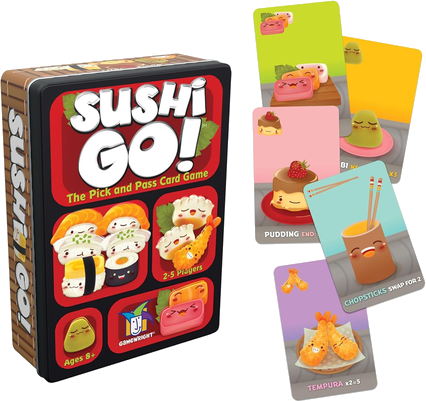
Players: 2–5 | Ages: 8+ | Play time: about 15 minutes
Everyone gets a hand of cards. You pick one, put it face down, then pass the rest to the person next to you. Repeat until the cards run out, score the round, and do it twice more.
The genius is that there’s no waiting. Every player is choosing at the same moment, so a table of five moves as fast as a table of two. For a family that’s the whole ball game, because the youngest never has time to get bored.
Scoring is the only fiddly part, and it’s the bit worth doing together for the first couple of rounds. Once a kid works out that three sashimi is worth ten points and two is worth nothing, they start playing a genuinely mean game.
Pros
- Everyone plays simultaneously, so there’s zero downtime
- Fits in a coat pocket
- Fifteen minutes, so you can fit two games in
Cons
- The scoring needs a cheat sheet for the first game
- Caps at five players
- Less funny than the party games here, so it won’t carry a whole night
Just One
Best Team Game
Write the perfect clue. Watch it get cancelled because your dad wrote the same one.
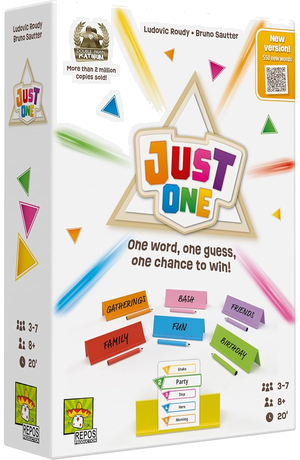
Players: 3–7 | Ages: 8+ | Play time: about 20 minutes
One person is the guesser. Everyone else sees the secret word and writes a single one-word clue on a dry-erase holder. Here’s the catch: any clue that two people wrote gets removed before the guesser sees anything.
So you’re not trying to write the best clue. You’re trying to write the clue nobody else thought of, which is a completely different and much funnier problem. Watching four people all independently write CAT and wipe out the entire round is the reason this game sells.
It’s cooperative, which makes it the right call for a family that gets a bit too competitive. You win or lose as one team, so the older kids end up helping rather than beating the younger ones.
Pros
- Cooperative, so nobody goes to bed sulking
- One-word clues keep it accessible for younger players
- Fast rounds, easy to stop and start
Cons
- Needs at least three players and really wants five
- Reading and writing required, so under-eights struggle
- Dry-erase pens dry out if somebody leaves the lid off
The Chameleon
Everyone knows the secret word except one person. Good luck bluffing.
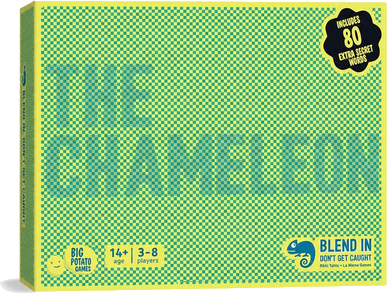
Players: 3–8 | Ages: 12+ | Play time: about 15 minutes
A topic card puts sixteen related words in a grid. Roll the dice, check your code card, and it points you at one of them. Everyone does this except one player, who draws the Chameleon card and gets nothing at all.
Then you go around the table and each person says one word about the secret word. Too specific and the Chameleon knows what it is. Too vague and the table thinks you’re the Chameleon. That squeeze is the entire game and it takes about fifteen minutes.
The box says 12 and up, and that’s a fair rating rather than a cautious one. Younger kids tend to give the word away immediately. With teenagers in the house, though, this is usually the game the night ends on.
Pros
- 800 topics in the box, so it doesn’t run dry
- No moderator and no app, unlike most deduction games
- Nobody is eliminated, so everyone plays every round
Cons
- Rated 12+, so it can’t cover a younger family
- Needs a table that will actually talk
- Three players is technically possible but not much fun
Cards vs Gravity
Balance a card on a bottle. Then another. Then hold your breath.
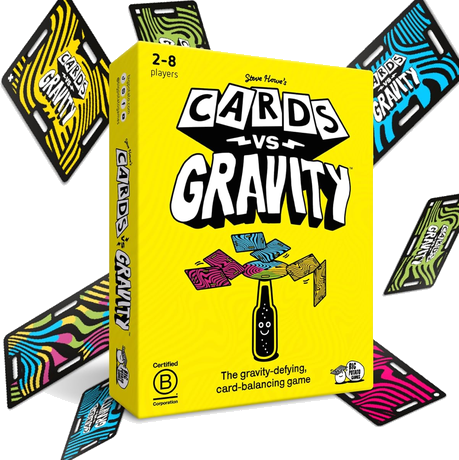
Players: 2–4 | Play time: about 10 minutes
You balance, hang and stack cards on top of a bottle. Any bottle. That’s it, and the whole thing takes about ten minutes.
What makes it work at a family table is that steady hands beat clever thinking. A kid who loses every word game in the house can be the best in the room at this one, and they will absolutely tell you about it afterwards.
The cards are waterproof and marked with symbols as well as colors, so it works for color-blind players and survives being taken outside. It’s a filler rather than a headliner, but it’s the right thing to reach for while dinner finishes.
Pros
- Ten minutes, so it fits in any gap
- Rewards steady hands rather than vocabulary
- Waterproof cards, and symbols for color-blind players
Cons
- Two to four players only
- You need a bottle, so it’s not quite self-contained
- A wobbly table ruins it
Anomia
Name a cereal. Right now. No, faster than that.
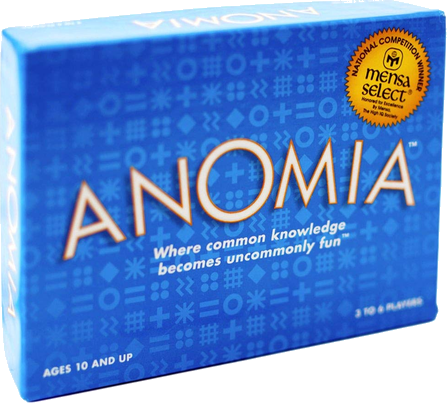
Players: 3–6 | Ages: 10+ | Play time: about 30 minutes
Players flip cards until the symbols on two cards match. Those two players then race to shout an example of the category on the other person’s card. Win and you take their card.
It sounds simple and it completely breaks your brain. Knowing the answer and being able to say it under pressure turn out to be two different skills, and watching an adult fail to name a single breakfast cereal is a reliable family highlight.
This is the small-publisher pick on the list and it deserves the shelf space. Two decks come in the box, it’s about the size of a paperback, and a game runs roughly half an hour with 3 to 6 players.
Pros
- Genuinely funny watching adults short-circuit
- Tiny box, travels anywhere
- Kids often beat grown-ups at it
Cons
- Caps at six players
- The speed element is stressful for some kids
- Categories are US-leaning, so a few will be missed in the UK
How the top board games for kids and adults compare
Herd Mentality vs Ticket to Ride
These are the two ends of what a family night can be. Herd Mentality is twenty minutes, takes a minute to teach and handles a room. Ticket to Ride is an hour, needs concentration and caps at five. Most board games for kids and adults sit somewhere between the two, so it’s worth owning one of each.
Verdict: Pick Herd Mentality if the group is big or the ages are spread out. Pick Ticket to Ride if it’s four of you and everybody wants to think.
Just One vs Sushi Go for a younger table
Both are gentle, both are quick, and both suit kids around eight. Just One is cooperative and needs writing, so it rewards a family that wants to be on the same side. Sushi Go is competitive, needs no writing at all, and everyone plays at the same time, which keeps the very youngest player in it.
Verdict: Go with Just One if your family gets too competitive. Go with Sushi Go if somebody at the table can’t write fast yet.
Chicken vs Hotdog vs The Chameleon to end the night
These are the two closers, and they suit opposite houses. Chicken vs Hotdog gets everyone standing and shouting, and it plays from age eight. The Chameleon sits everybody back down and works best with teenagers who enjoy accusing each other of lying.
Verdict: Pick Chicken vs Hotdog with younger kids or a big group. Pick The Chameleon once the under-twelves are in bed.
How we chose these board games for kids and adults
We had one hard rule for these board games for family game night: a child has to be able to win without anyone letting them. That knocks out most of the games usually recommended for families, because a game that rewards a bigger vocabulary or more experience isn’t really a family game. It’s an adult game with kids sitting at the table.
Everything here also teaches in five minutes or less, with one deliberate exception. Ticket to Ride takes longer to set up and longer to play, and it’s on the list because plenty of families want exactly one game like that in the cupboard.
Player counts are checked against each game’s current listing, not the publisher’s marketing. Where a game caps at four or five, we’ve said so in the cons rather than burying it. And every game here is sold in both the US and the UK, which quietly ruled out a few well-known picks.
We don’t take payment for placement. No publisher has paid to appear here and no ranking on this list is for sale.
Player counts and age ratings checked against Big Potato Games, Days of Wonder, Gamewright, Anomia Press.
Board games for kids and adults: frequently asked questions
What’s the best board game for a family game night with mixed ages?
Herd Mentality, because the thing it tests is not knowledge. Everyone writes an answer to a simple question and scores only if they match the majority, so a ten-year-old guessing what the room will say beats an adult overthinking it. It runs from 4 to 20 players and takes about 20 minutes. If your youngest is under ten, Sushi Go is the better call at 2 to 5 players, since everyone chooses a card at the same moment and nothing needs to be written down. For a family with teenagers, The Chameleon at 3 to 8 players is usually where the night ends up.
What board games work for a big family of eight or more?
Most family games quietly cap at five or six, so the list is shorter than you’d think. Herd Mentality is the safest pick and goes to 20 players, which covers a holiday table. Chicken vs Hotdog handles 2 to 10 and gets people out of their seats, which helps when a big group has been sitting still. The Chameleon reaches 8, though it’s rated 12 and up. Ticket to Ride, Sushi Go, Just One and Anomia all cap between five and seven players, so with a big family they’re best used as the second game once some people have drifted off.
Are there good family board games that aren’t Monopoly?
Yes, and the reason to move on is length rather than snobbery. Monopoly runs long and eliminates players, so somebody sits out the last hour. Herd Mentality covers the same everyone-plays-together slot in about 20 minutes with 4 to 20 players. If it’s the strategy your family likes, Ticket to Ride gives you route building and planning for 2 to 5 players in 30 to 60 minutes with nobody knocked out. For the quick filler that Monopoly never was, Sushi Go or Cards vs Gravity both finish inside fifteen minutes.
How long should a family game night game take?
Twenty minutes is the sweet spot, and it’s not an accident. That’s roughly how long a mixed-age table stays fully engaged before somebody needs a break, and it’s short enough that losing doesn’t ruin anyone’s evening. The board games for kids and adults that get replayed most tend to land right around that mark, including Herd Mentality, Chicken vs Hotdog and Just One. Sushi Go and Cards vs Gravity come in shorter, at about fifteen and ten minutes, which makes them useful openers. Only Ticket to Ride runs long at 30 to 60 minutes, so save it for a night when everybody has agreed to something bigger.
What’s a good family board game for two or three people?
Quite a few of these need a crowd, so this matters. OK Play works from 2 players and is the best small-table pick here, since it’s pure tile strategy with no need for a group. Cards vs Gravity plays from 2 as well and takes about ten minutes. Sushi Go and Ticket to Ride both start at 2 players and hold up fine, though both are better with more. Skip Herd Mentality below four players and skip Just One below three, because both rely on a spread of answers to work at all.
If you’re buying one of these board games for kids and adults, buy Herd Mentality. It covers the biggest range of ages and players of anything here, and it’s the one most likely to still be coming out of the cupboard next year. Add OK Play if your kids are on the younger side, and Ticket to Ride if somebody has been asking for a proper game.